A
Profile reviewedEmail verified

Angela L

AI Systems Engineer | Agentic Systems, Workflow Automation & Custom Tools

I build AI systems, workflow automation and custom tools for problems that do not fit neatly into off-the-shelf software. My work ranges from focused automations that remove repetitive manual work to larger agentic systems involving multiple models, tools, APIs, permissions, execution controls and human review. My background is in academic research rather than traditional CS/IT, which has strongly shaped how I build: I care about evidence, traceability, failure cases and validating what a system actually does rather than trusting that an output simply looks correct. This is particularly useful when a workflow is repetitive, difficult to scale, spread across too many tools, or needs AI and automation without giving up visibility and control.

Availability
Limited availability
Location
Canada
Languages
Cantonese · English · Mandarin
Timezone
America/Toronto
BuildFix or finishAutomation
Request this Operator

Share a private project brief. No customer account is required; this Operator remains a preference until OpsSeek confirms an introduction.

What Angela has shipped.

Proof of Work leads this profile: the context, the contribution and the real work behind each project.

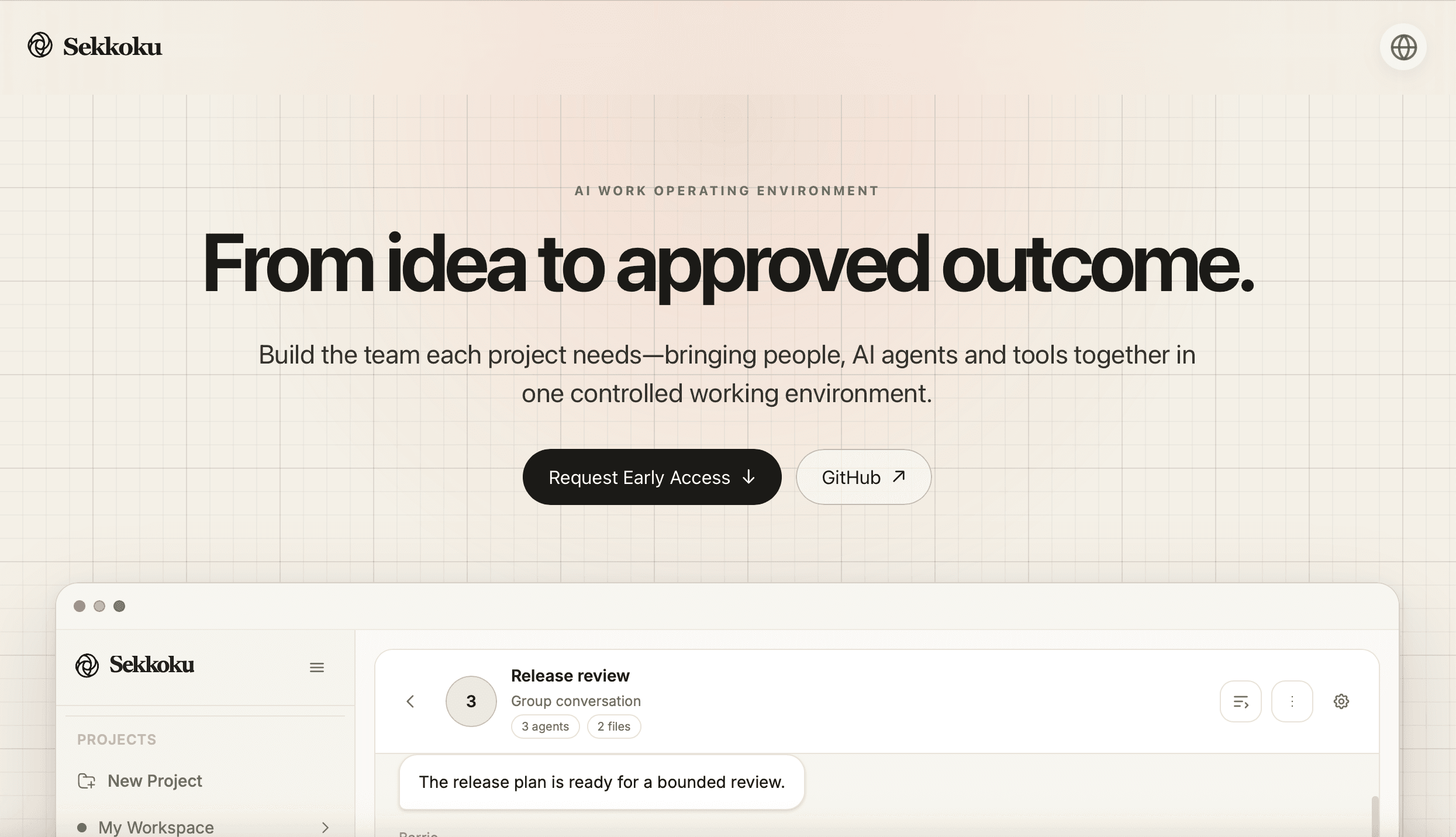
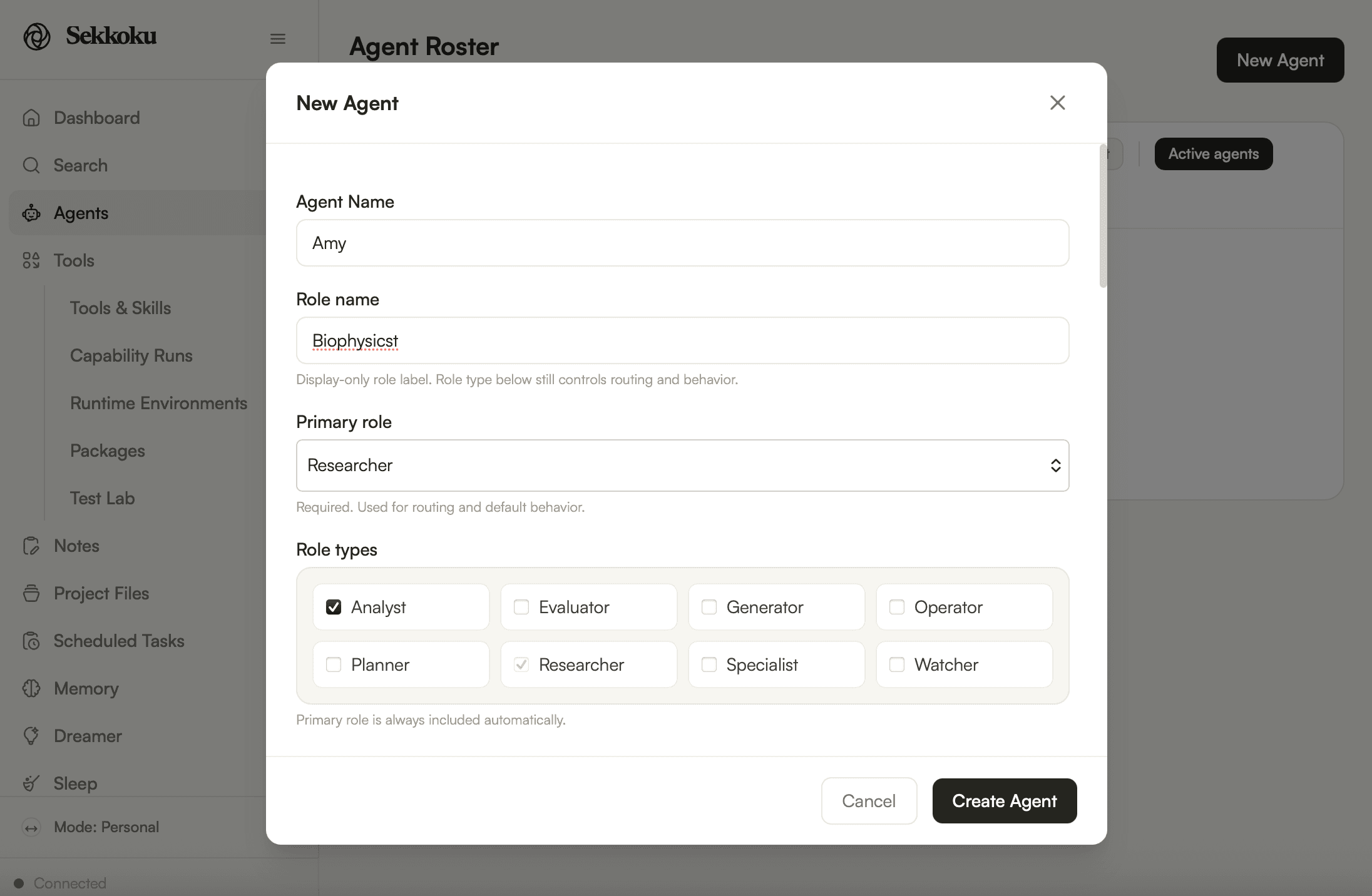
Sekkoku — Proof of Work by Angela L
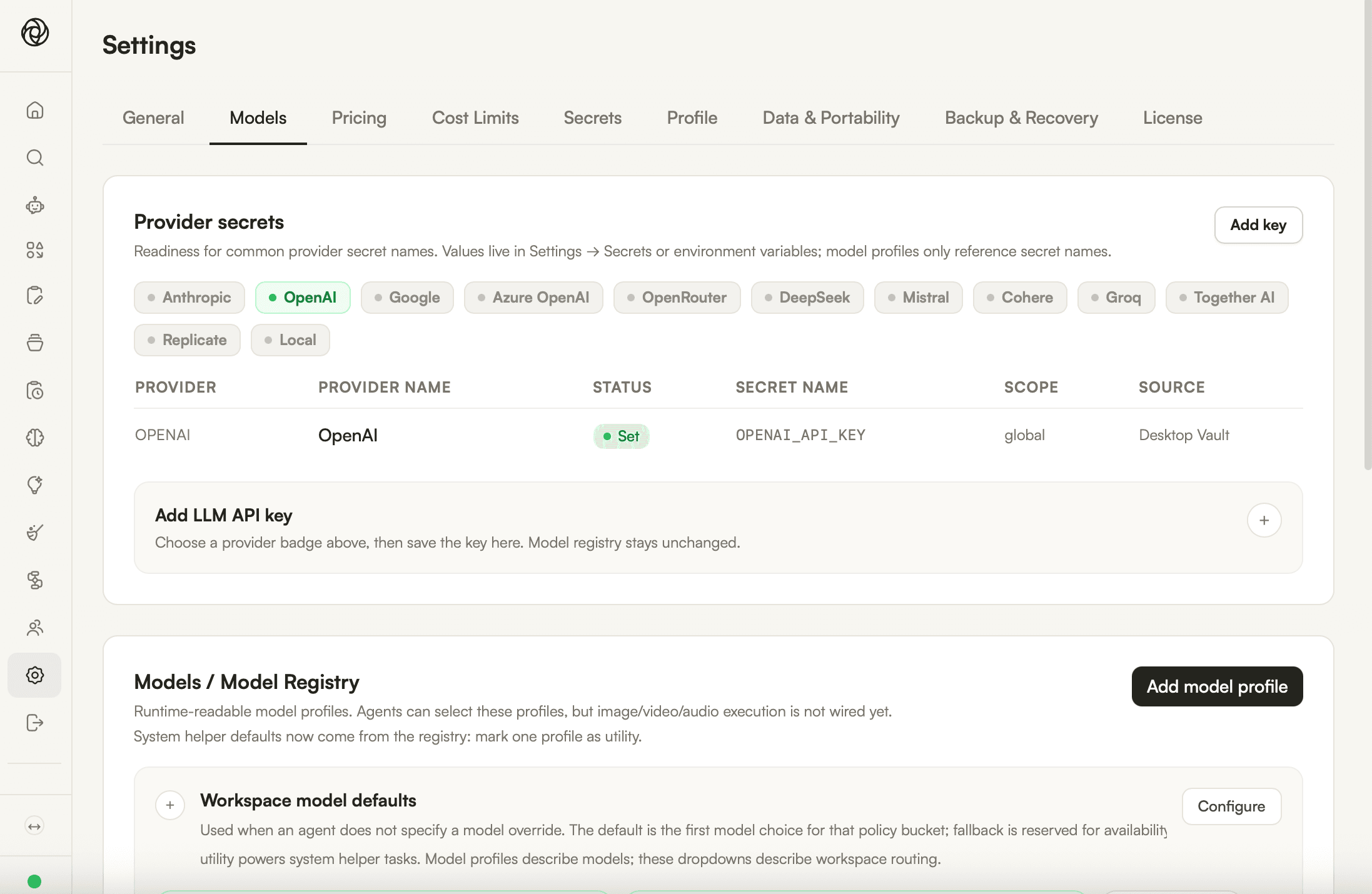
Sekkoku — supporting Proof of Work image 2 by Angela L
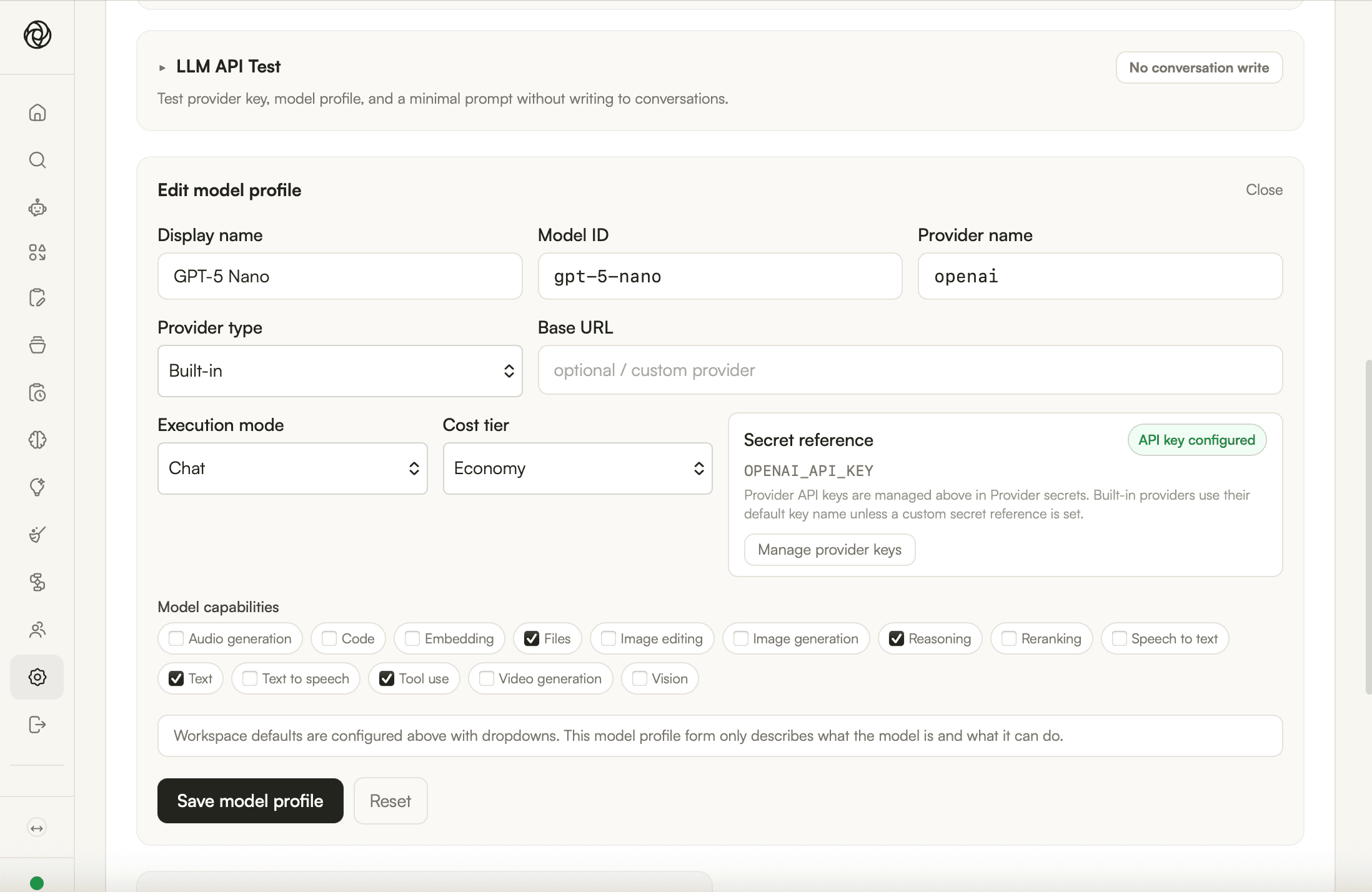
Sekkoku — supporting Proof of Work image 3 by Angela L
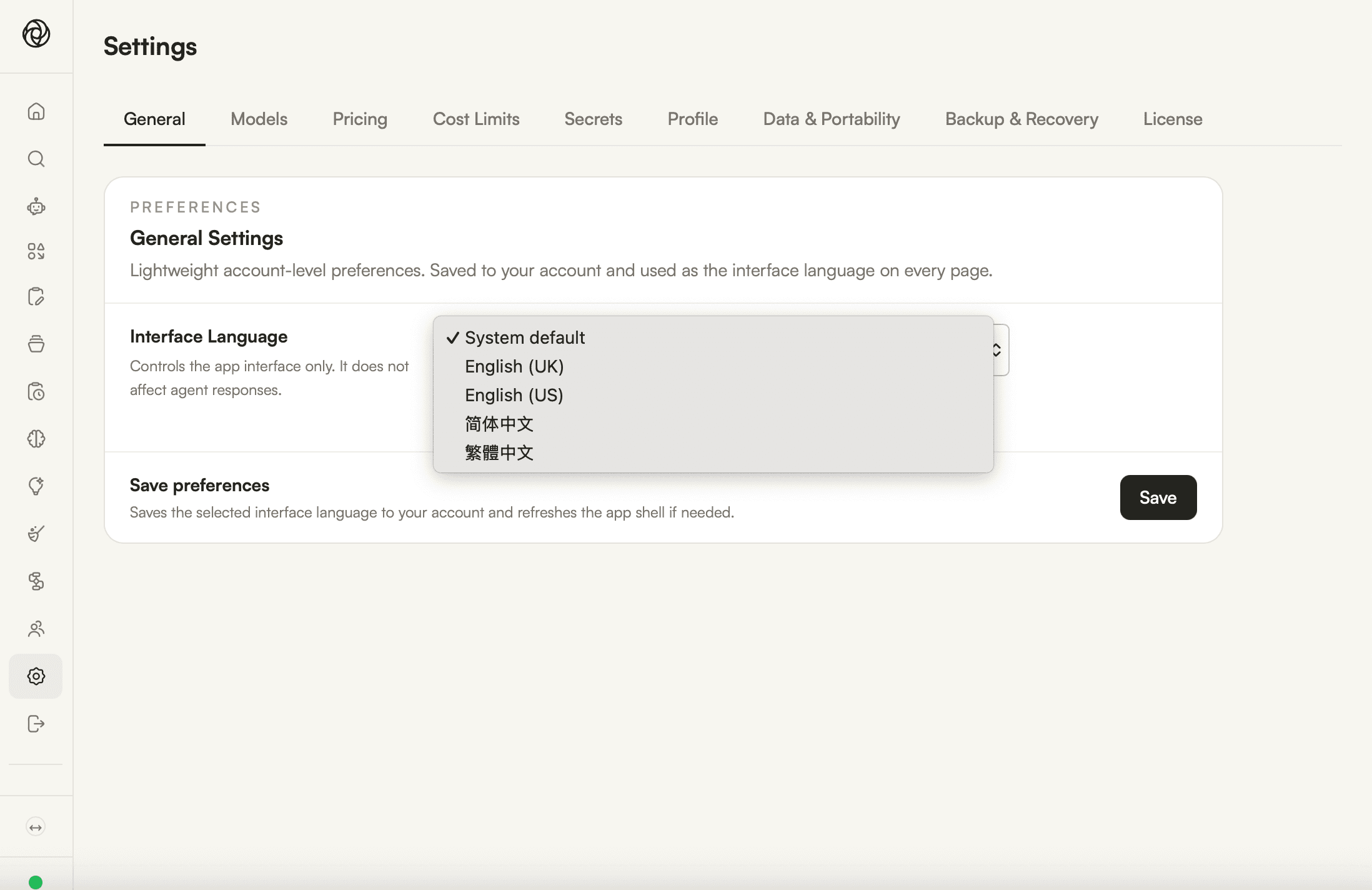
Sekkoku — supporting Proof of Work image 4 by Angela L
Sekkoku — supporting Proof of Work image 5 by Angela L
Build· 2026

Sekkoku

Governed workspace for building and operating multi-agent AI systems with tools, credentials, execution controls and human review.

The context
I originally started Sekkoku after repeatedly switching dialogue between ChatGPT, Gemini and Claude and manually moving context between them. As the idea developed, the harder problem became less about connecting models and more about controlling what multiple agents, tools and credentials are allowed to do once they begin interacting.
What was shipped
I built a provider-neutral work environment where human collaborators and AI agents can operate inside project boundaries, use different models, APIs, MCP servers, tools and reusable capabilities, and work through single- or multi-agent conversations and workflows. The system includes explicit permissions, credential controls, execution boundaries, checkpoints, artifacts, validation, diagnostics, budgets and human review rather than treating them as invisible infrastructure. Sekkoku is built as a web application with a Python backend and browser-based frontend, with direct integrations to external AI providers, APIs, MCP services and tools.
Operator contribution
conceived and built the project independently, including the system architecture, product model, agent and tool integration, governance and execution model, frontend workflows, backend behaviour, debugging and validation process. I use AI coding tools as part of development, but I independently inspect changes and test expected behaviour, surrounding workflows, permission boundaries, regressions and failure paths before trusting deeper changes.
API integrations
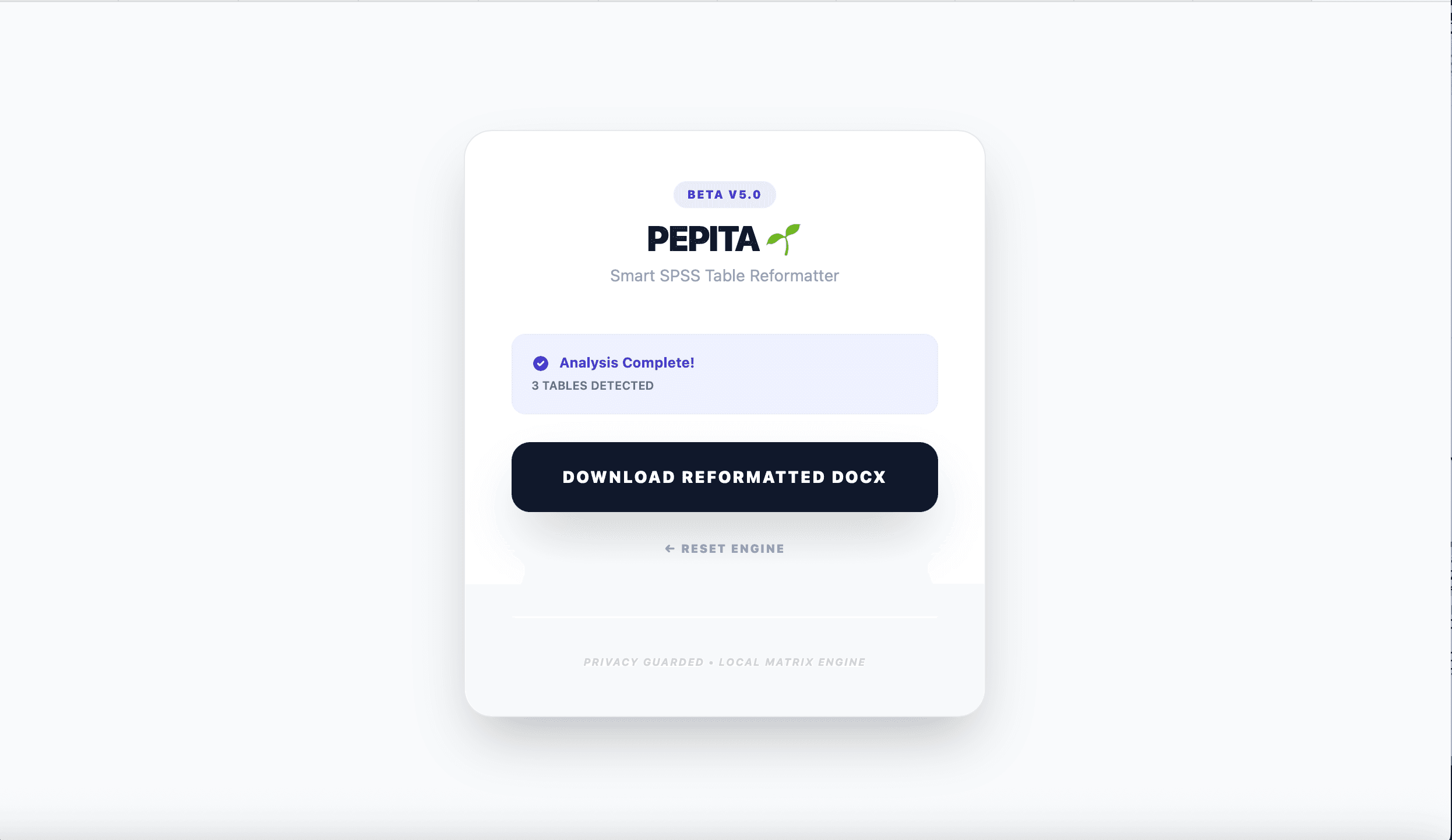
Pepita — Proof of Work by Angela L
Pepita — supporting Proof of Work image 2 by Angela L
Automation· 2026

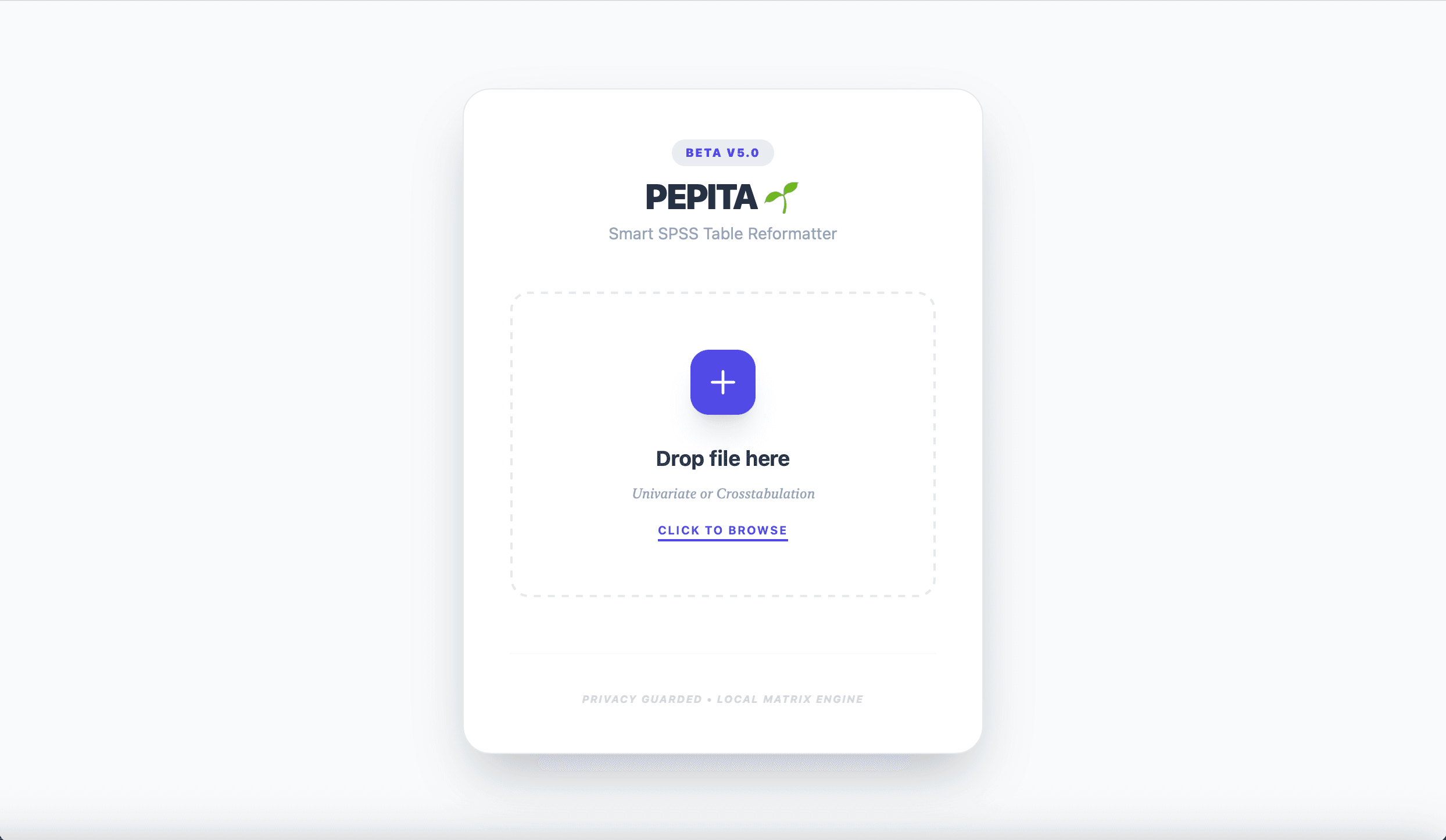
Pepita

Browser-based automation that reduced manual SPSS-export .docx table processing from roughly 20 hours to about 20 minutes for 20 tables.

The context
A researcher I know was manually reworking SPSS-generated tables in Word for reports. Processing around 20 tables could take roughly 20 hours, and the work was repetitive but difficult to avoid because the generated format was awkward to edit directly.
What was shipped
I built a lightweight browser-based tool that takes the generated DOCX files and restructures the tables into a form that is easier to review and manage. I deliberately kept it as a pure frontend workflow rather than requiring a server or Python installation: the user opens the page, drags in the document, processes it locally and downloads the result.
Operator contribution
I translated the user's existing manual process into deterministic document-processing logic, built the frontend interface, tested it against real examples and iterated on the output with him until it matched his reporting workflow. I also simplified the interaction for a non-technical user so there was no environment setup or command line involved. The resulting workflow reduced the same batch of work from roughly 20 hours to about 20 minutes.
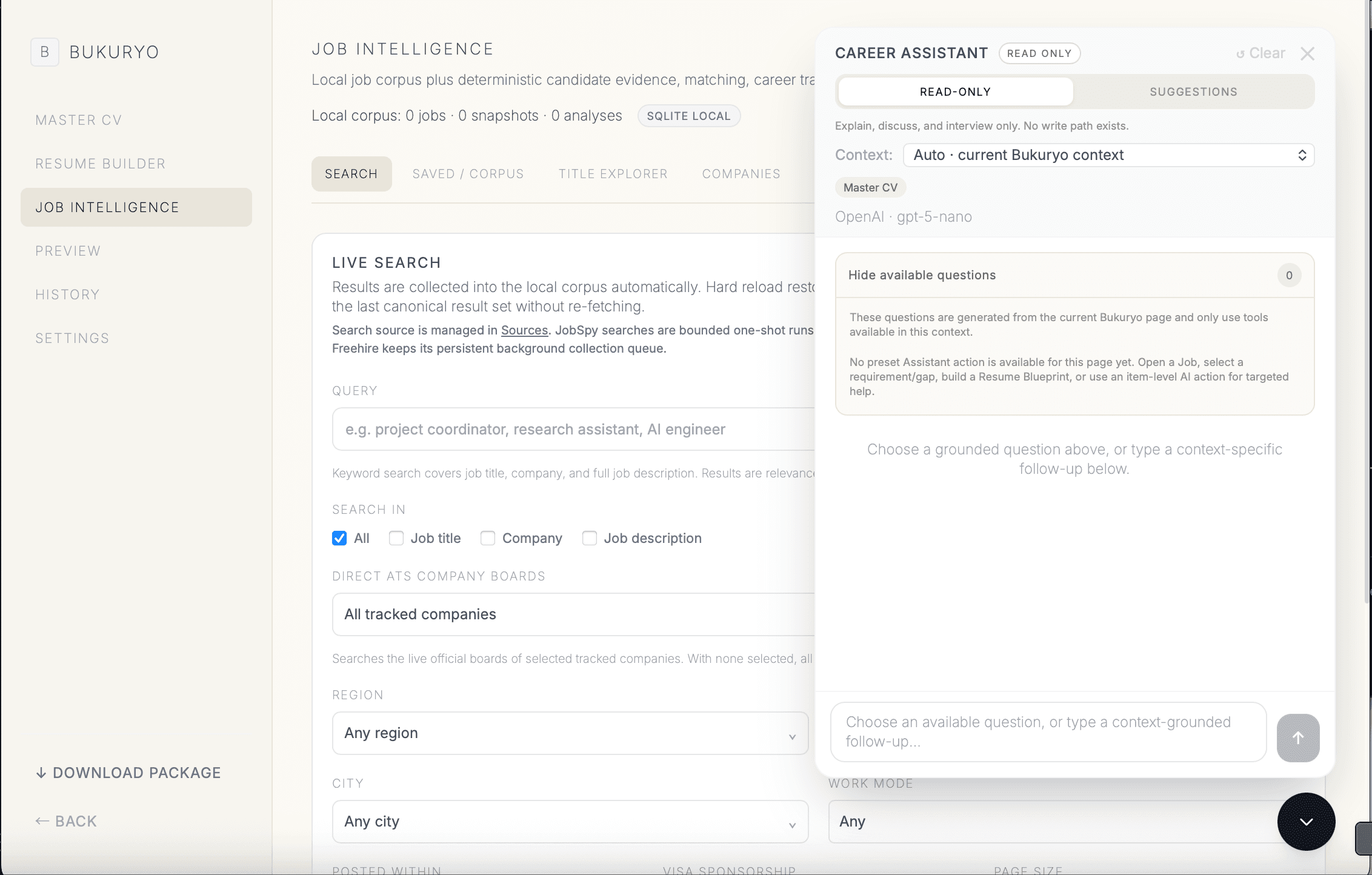
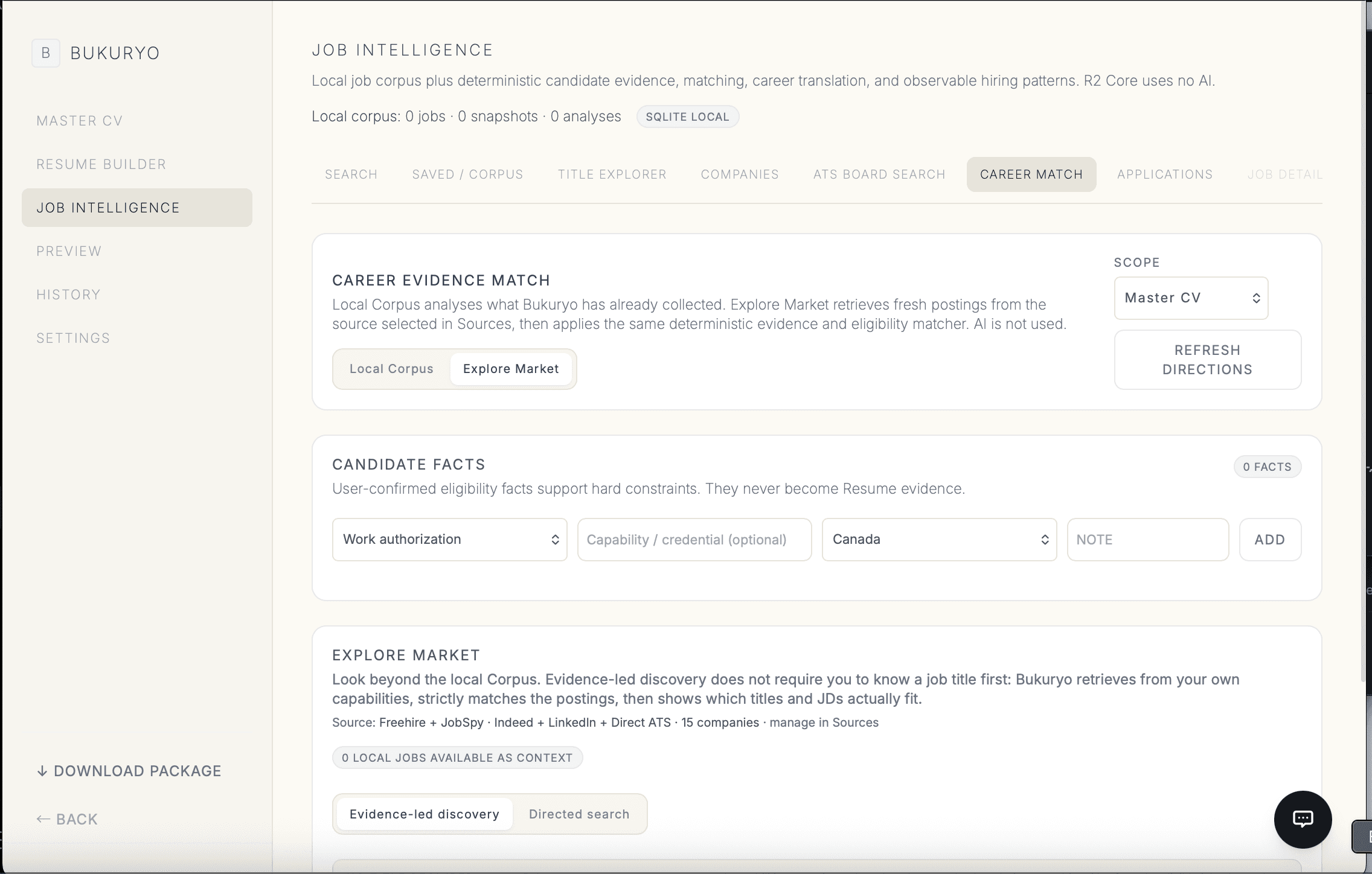
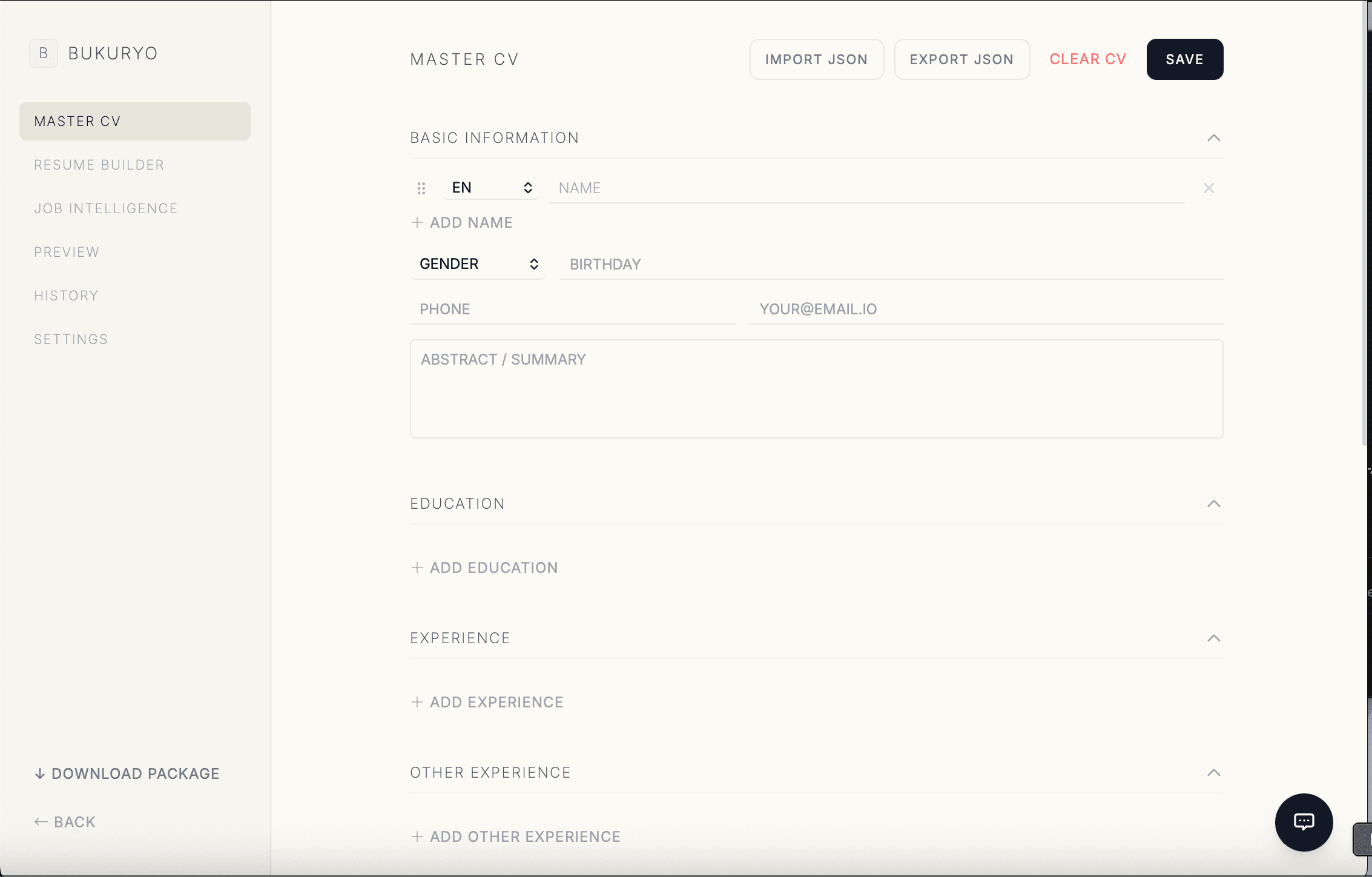
Bukuryo — Proof of Work by Angela L
Bukuryo — supporting Proof of Work image 2 by Angela L
Bukuryo — supporting Proof of Work image 3 by Angela L
Bukuryo — supporting Proof of Work image 4 by Angela L
Build· 2026

Bukuryo

A local-first career, resume and job-intelligence workspace with deterministic evidence-based matching and optional AI assistance.

The context
After moving to a different labour market, I found that job titles and expectations did not map cleanly to my previous experience. Having worked across several fields made ordinary keyword searching even harder because I sometimes did not know what equivalent roles were called locally. I wanted a system that started from my actual career evidence and could explain why a job might fit rather than reducing everything to an opaque AI score.
What was shipped
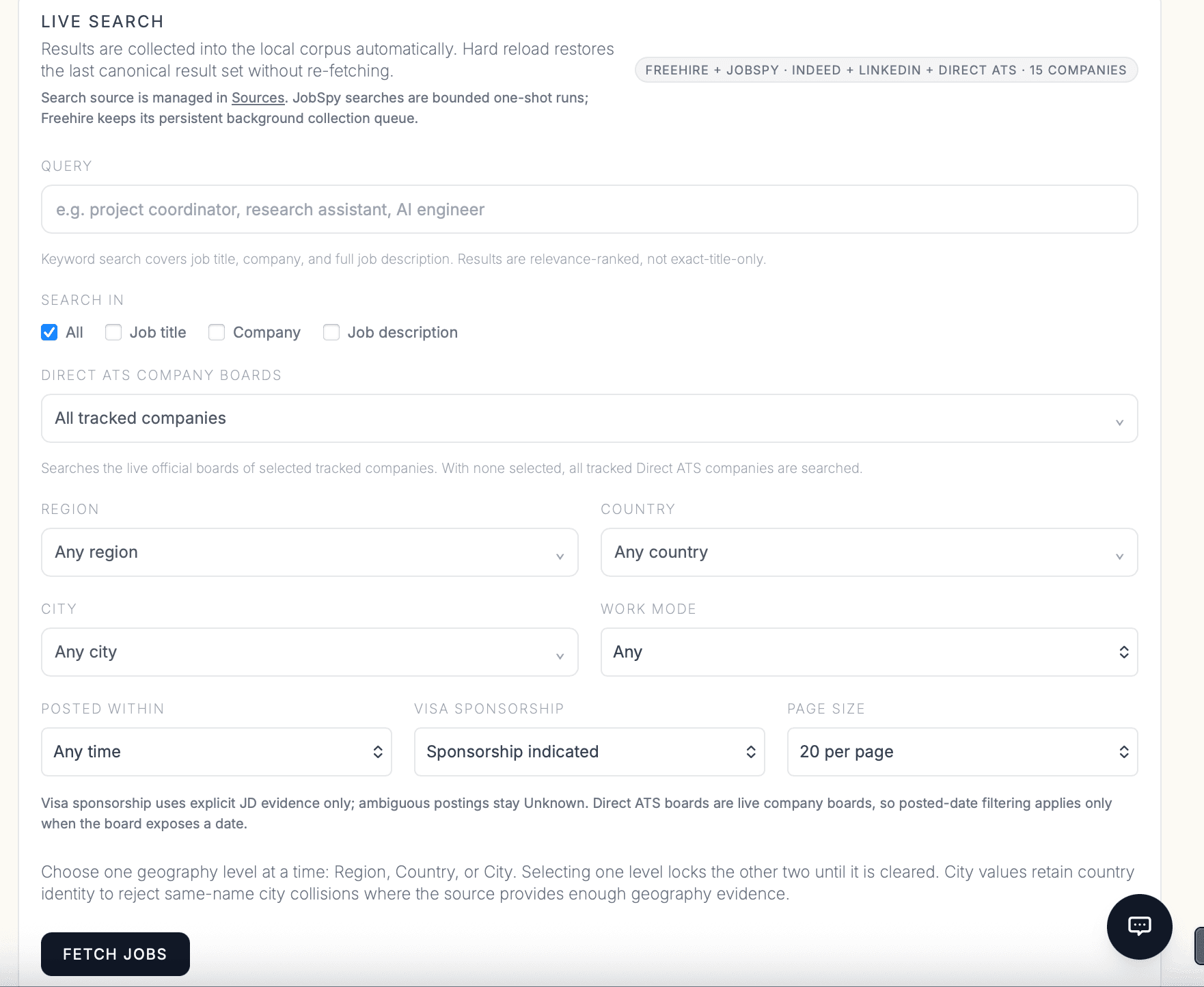
I built a local browser workspace around a structured Master CV and independent resumes, then expanded it with multi-source job collection, a persistent job corpus, deterministic job-description parsing and matching, title and market exploration, direct public ATS-board tracking, visa-sponsorship evidence filtering and application history. The frontend is built with standard HTML, CSS and JavaScript, while a local Python FastAPI service handles persistent Job Intelligence through SQLite. Source integrations use HTTP APIs and adapters, including Freehire, python-jobspy and direct Greenhouse, Lever, Ashby, Workable, SmartRecruiters, Recruitee and BambooHR boards. An optional browser-side BYO-key assistant supports OpenAI, Anthropic and Gemini without making AI a requirement for the core workflow.
Operator contribution
I designed and built the application independently, including the career-evidence model, resume workflow, frontend, FastAPI backend, SQLite persistence, job-source adapters, canonical corpus, deterministic parser and matching logic, ATS discovery and tracking, market exploration, application records, optional AI layer and regression tests. I deliberately kept the core analysis deterministic and evidence-traceable so users can inspect where a match came from and distinguish evidence coverage from actual eligibility constraints.
API integrations
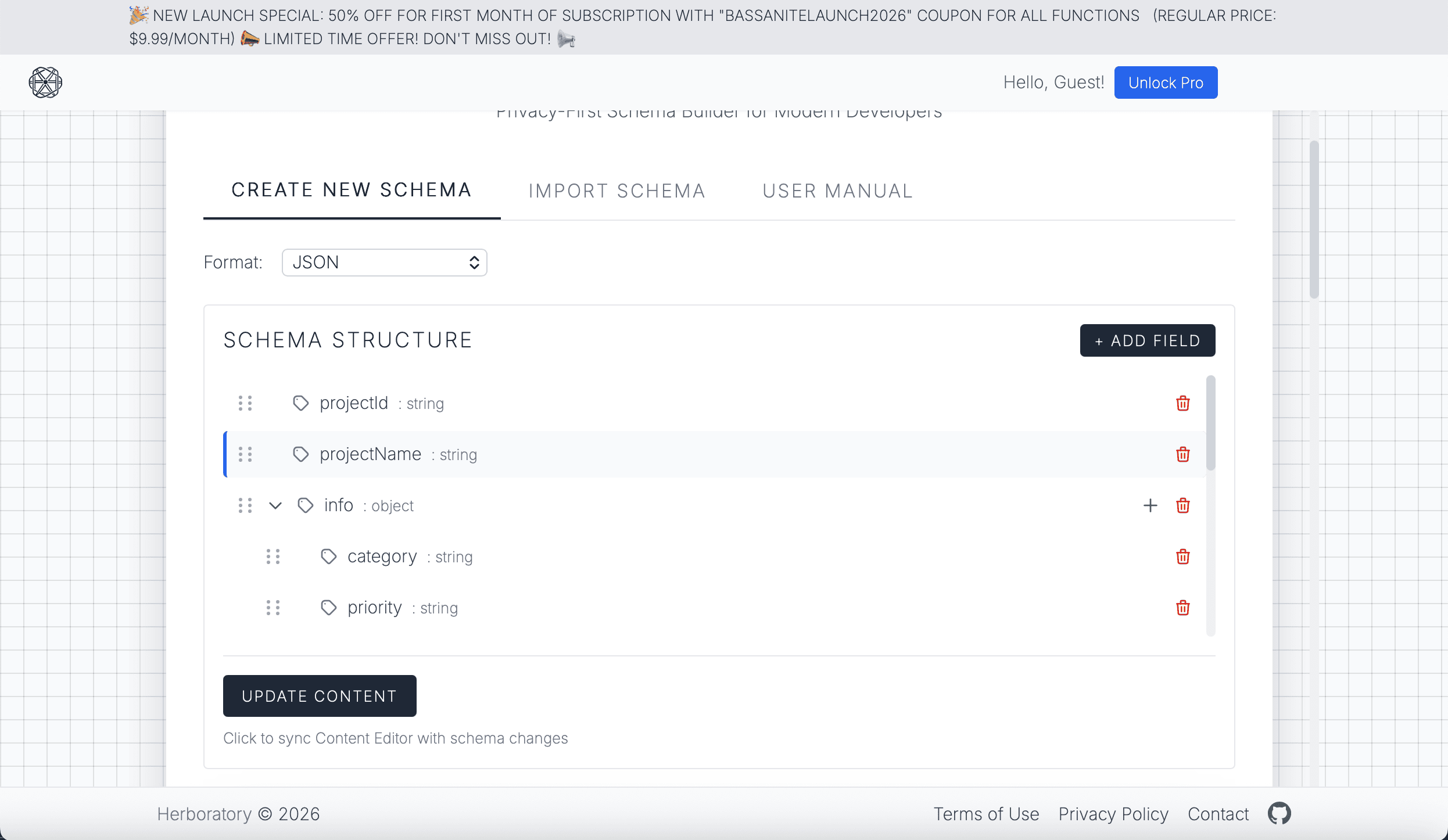
Bassanite — Proof of Work by Angela L
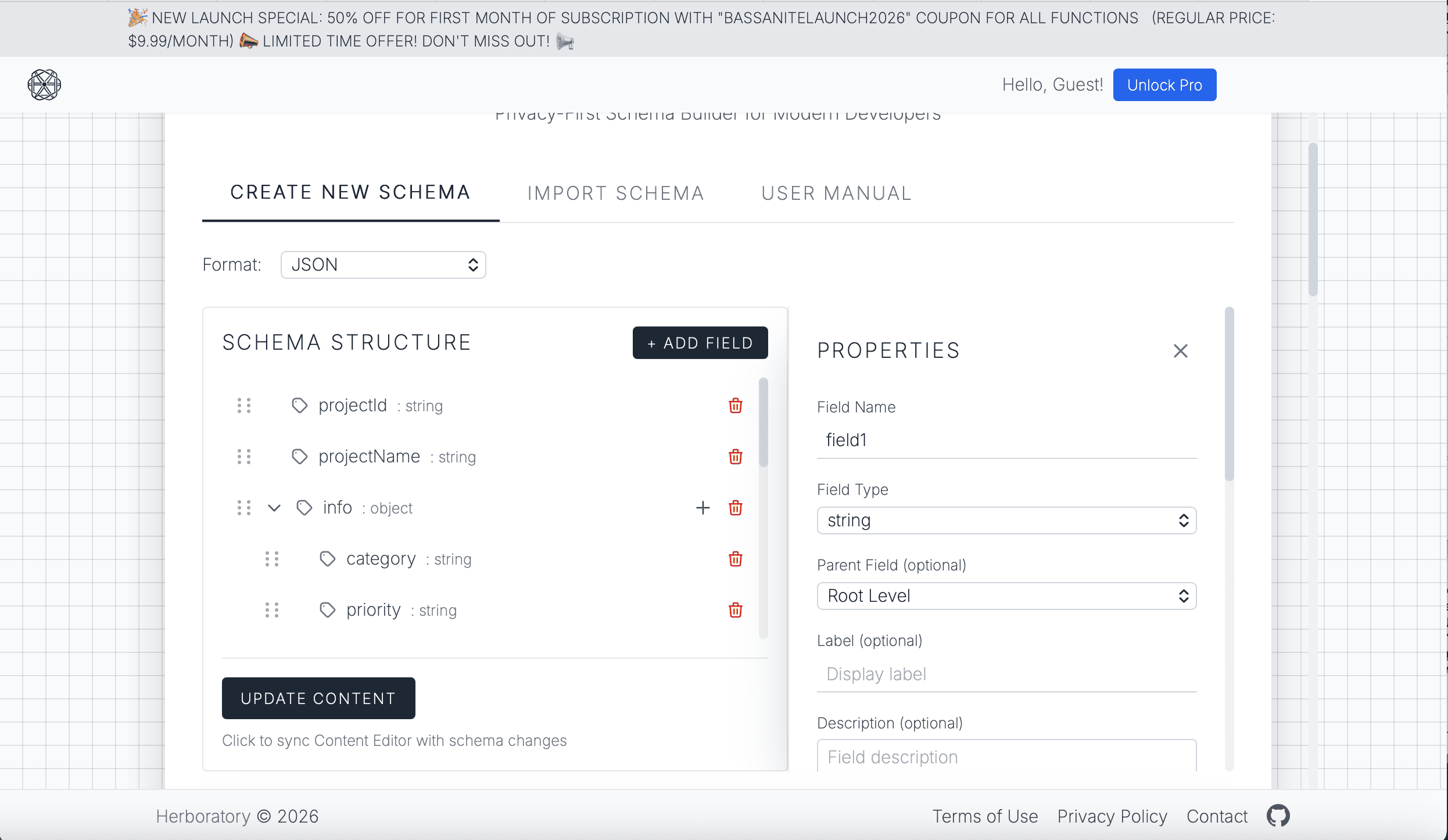
Bassanite — supporting Proof of Work image 2 by Angela L
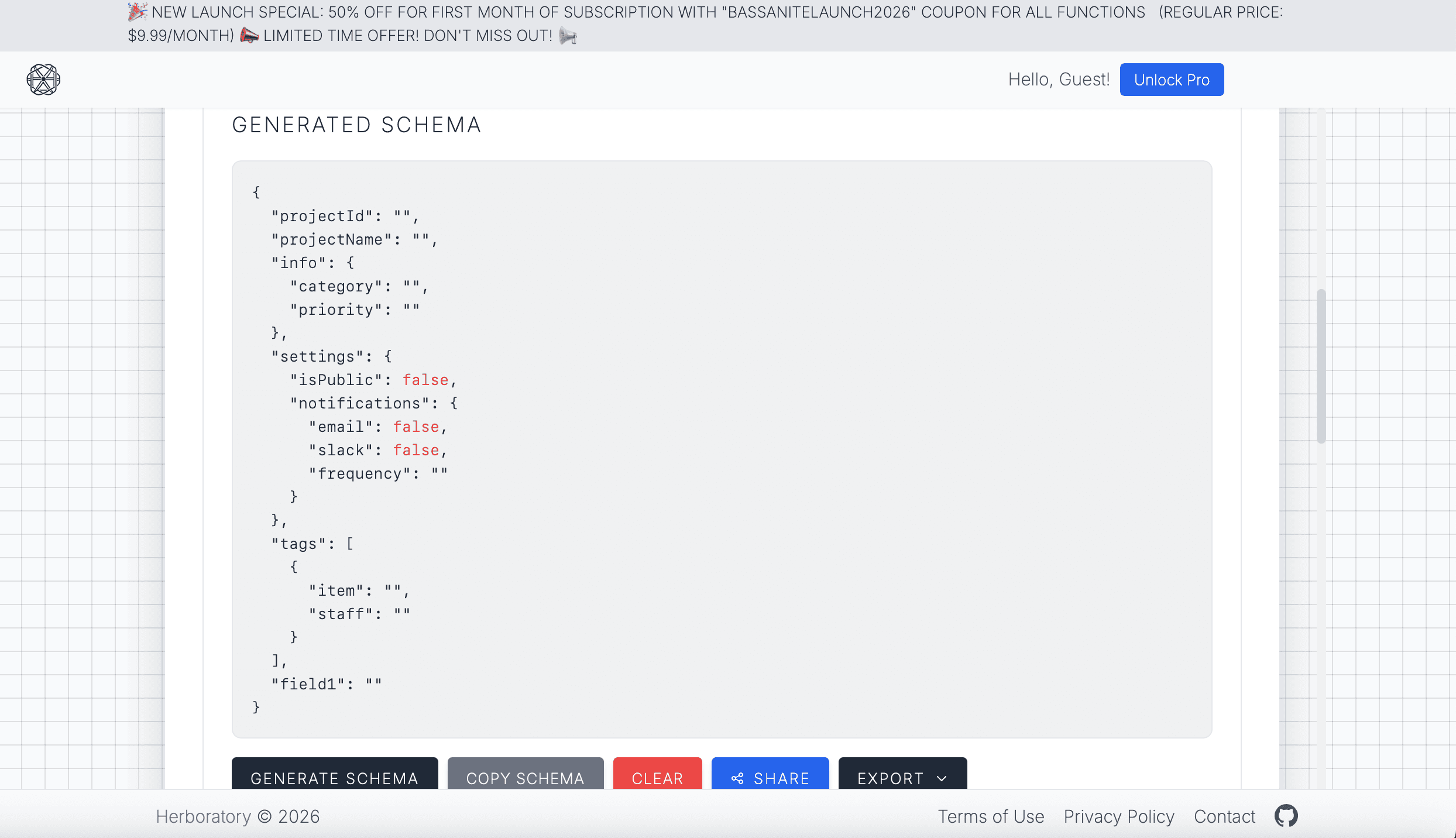
Bassanite — supporting Proof of Work image 3 by Angela L
Bassanite — supporting Proof of Work image 4 by Angela L
Bassanite — supporting Proof of Work image 5 by Angela L
Bassanite — supporting Proof of Work image 6 by Angela L
Build· 2026

Bassanite

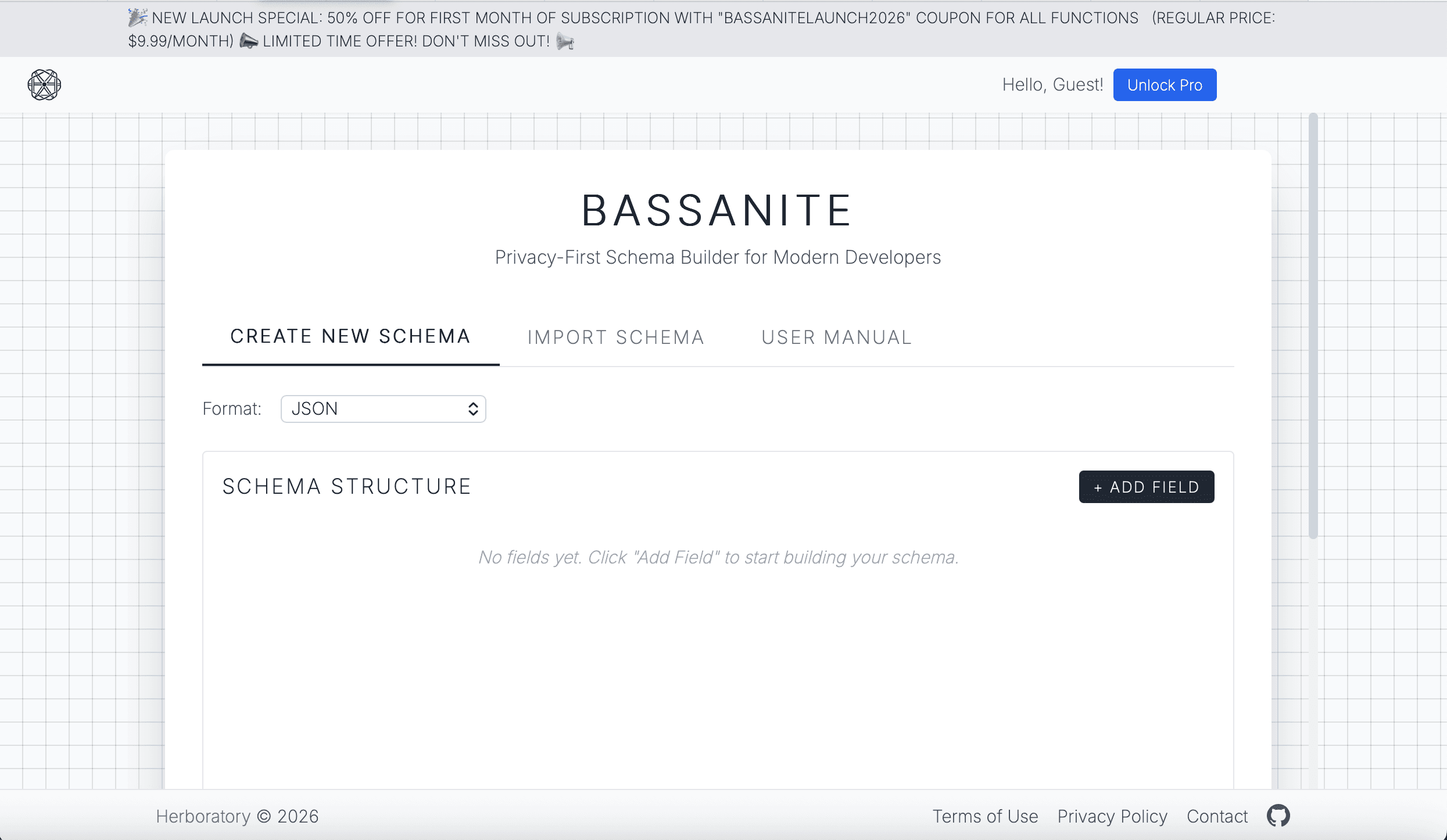
A privacy-first visual schema builder for creating one structured model and converting it across multiple development formats.

The context
I often needed to work with JSON despite not coming from a software-engineering background, and manually editing deeply nested structures made it easy to lose track of relationships or introduce mistakes. I wanted a visual way to understand and modify the structure while still keeping the underlying model portable between different development ecosystems.
What was shipped
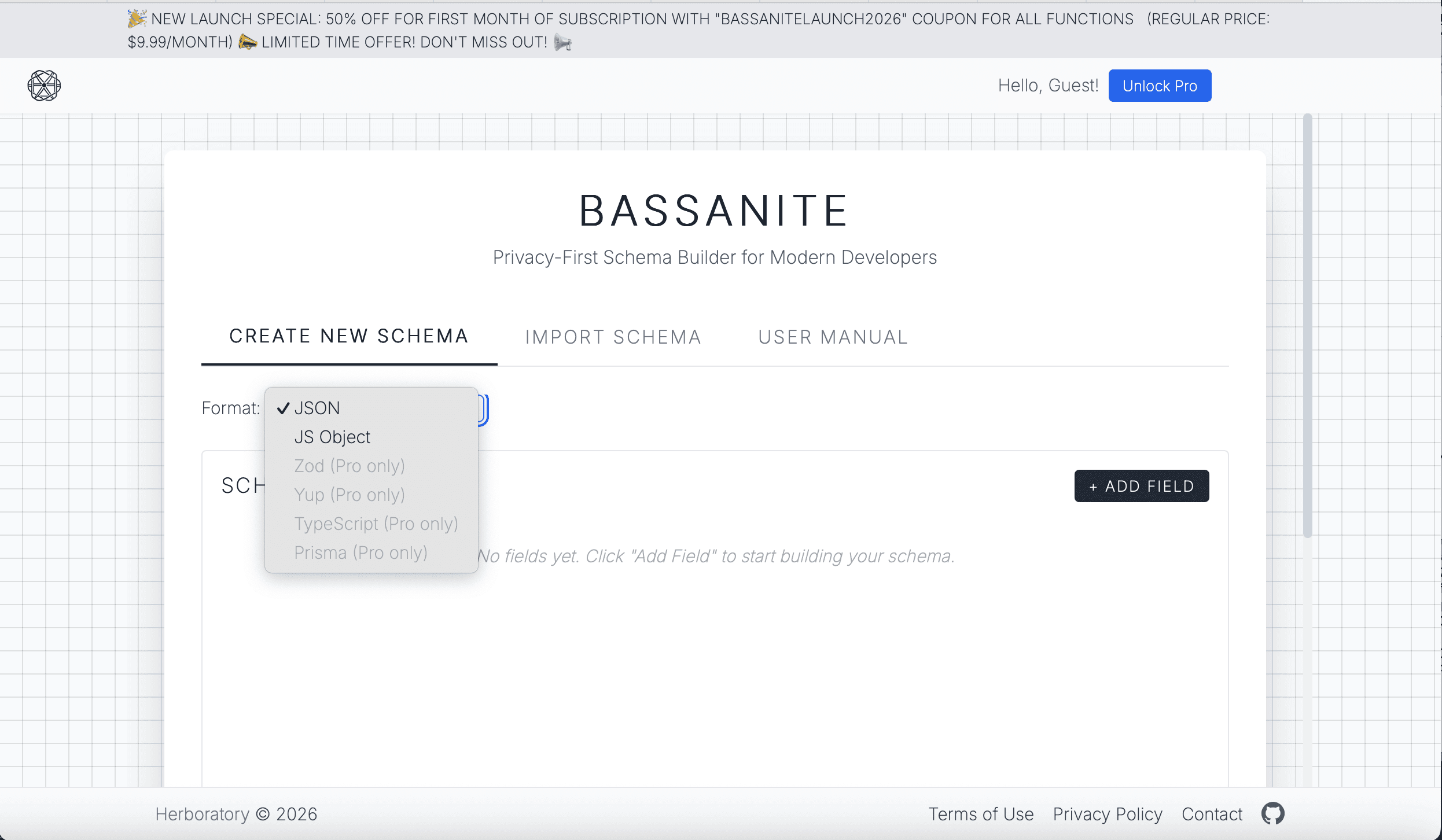
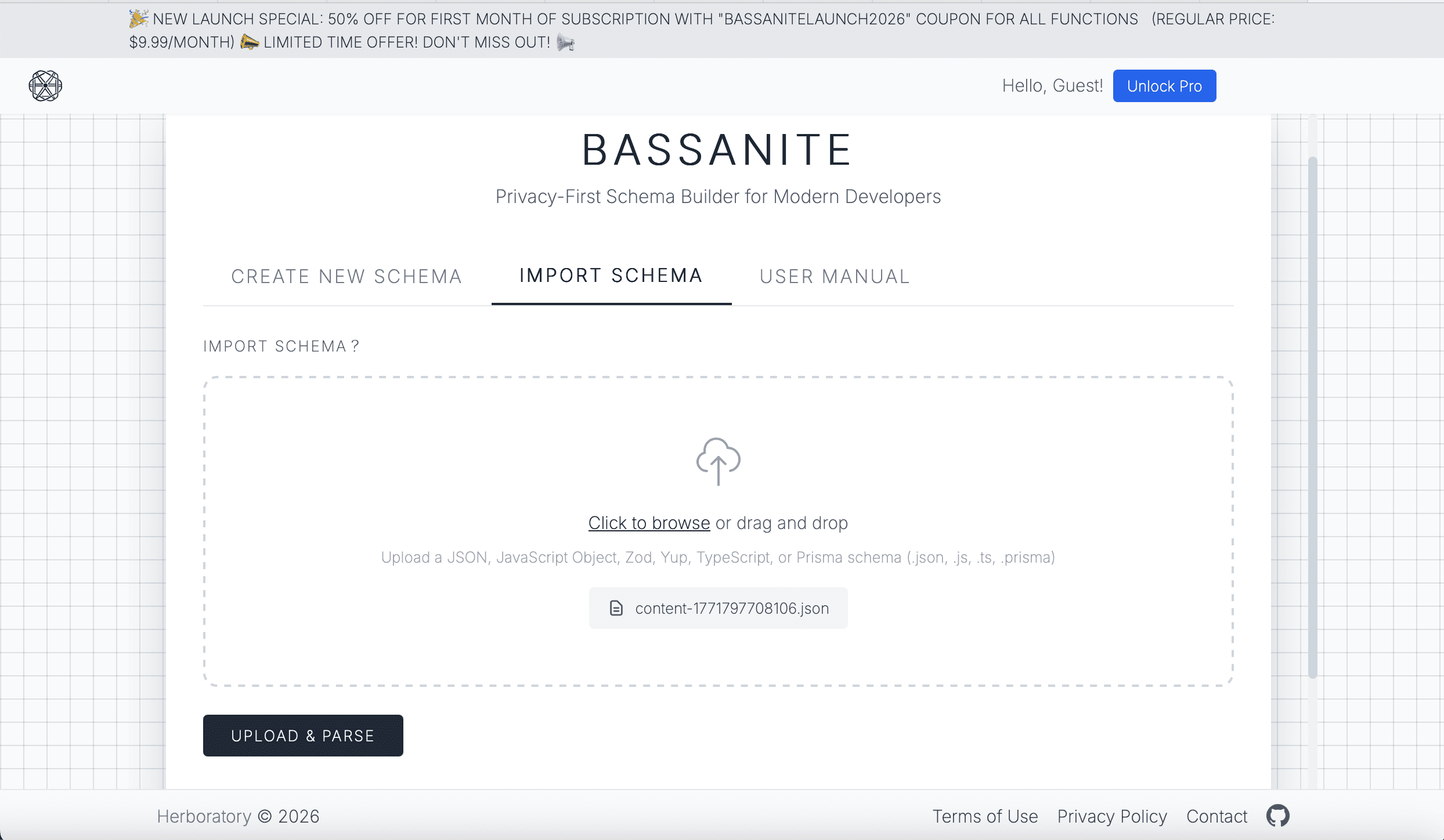
I built a browser-based schema builder and structured content editor that lets users create a model once and work with it across JSON Schema, JavaScript objects, TypeScript, Zod, Yup and Prisma. The application uses HTML, Tailwind CSS and Alpine.js for the frontend, performs schema generation and transformation client-side, and is deployed on Cloudflare Pages. Firebase handles authentication and access control, while Stripe provides the subscription layer for Pro features with Zapier. Bassanite also supports serverless sharing by encoding schemas directly into the URL rather than storing shared schema data in a database.
Operator contribution
I conceived, designed and built the product, including the schema model, visual builder, content editor, import/export transformations, frontend experience, privacy model, sharing workflow, authentication/access logic, deployment and Stripe subscription integration. I also owned the integration debugging across the product, including issues where the visible behaviour looked correct locally but the underlying authentication or payment state had to be traced across several systems before I trusted the result.
Zapier

Skills and tools

Node.jsPostgreSQLTypeScriptCodexZapierAPI integrations

Working fit

Capacity
Discuss with OpsSeek
Pricing is shared only when the Operator chooses to publish it.

Could Angela L be right for your project?

Tell OpsSeek what you need with this Operator carried into the private brief as your preference.

Request this Operator